
That barcode number on your product? Yeah, it’s kind of a big deal for your ads. And look, we get it: product identifiers like GTINs and part numbers feel like a chore in e-commerce. They’re easy to think of as “just another box to check.” But here’s the truth: those little strings of numbers aren’t busy work. They’re how platforms like Google, Microsoft Advertising, Amazon, TikTok, and Meta understand what you’re selling. Get them right, and your products show up where they’re supposed to. Get them wrong, and… well, good luck getting any traction at all.
Let’s break down what matters, why it matters, and how to make sure you’re doing it right.
GTIN and Brand: The Essentials
At the heart of it all is the GTIN — that’s your Global Trade Item Number. In North America, it’s usually a UPC, in Europe an EAN, and for books an ISBN. This is the universal identifier that says, “This item is this exact product.”
Pair that GTIN with the brand attribute, and you give search engines and marketplaces an easy key to unlock all the product information they have access to. This helps them confidently match your item to the right searches and placements, and that’s the foundation for being eligible and competitive in paid and free listings alike.
Search engines don’t care about GTINs because they love numbers. They care because accurate identifiers make their job easier and your listings more relevant. When your GTIN and brand are correct, platforms can pull in rich details, reviews, pricing comparisons, and more. Your product is no longer just another listing; it’s a known entity in the global marketplace.
Why Clean Identifiers Matter Everywhere
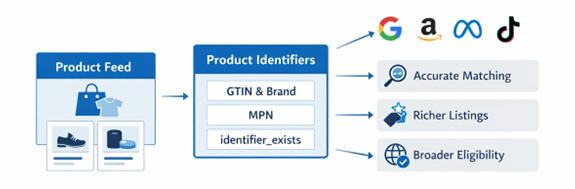
Getting product identifiers right improves more than Google Shopping; it drives results across the entire commerce ecosystem:
- Google & Microsoft Advertising: These platforms lean heavily on identifiers to match products with search queries and unlock higher-quality ad placements. Accurate data often means better visibility and more efficient spend.
- Amazon & Walmart: These marketplaces are strict. Most categories require a valid GS1-assigned GTIN, and the right code connects you to the correct product detail page and its associated trust signals (sales history, reviews, etc.).
- Meta (Facebook & Instagram): For dynamic ads and Shops, identifiers help Meta’s algorithm accurately recommend products, improving catalog match rates and ad performance.
- Pinterest & TikTok Shop: Visual discovery platforms use identifiers to fuel rich pins and sync catalogs — which helps your products surface in relevant discovery feeds.
In short: platforms use identifiers to connect the dots between your feed and the broader web of product data. The more accurate your data is, the better these platforms become at knowing when to show your products.
But What If Your Product Doesn’t Have a GTIN
Not every product comes with a GTIN. Custom gear, vintage finds, industrial parts, and handmade items often fall into that category. But there are additional attributes to help marketing platforms identify your products.
- MPN (Manufacturer Part Number): This is the next best thing if there’s no universal GTIN. MPNs are specific to the manufacturer and help platforms understand what the item is even without a global code.
- identifier_exists : If a product truly doesn’t have a universal identifier, set identifier_exists to no (or FALSE). This flag tells platforms you’re not being sloppy; there is no GTIN for this item, and it prevents unnecessary errors or product disapprovals.
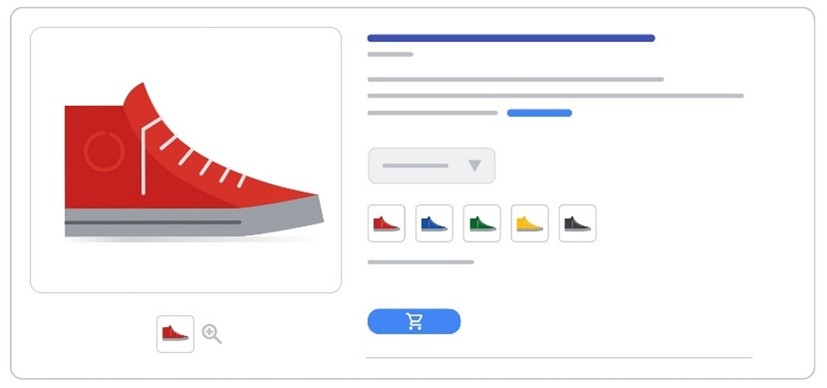
- item_group_id: This one is a quiet revenue saver. If you have variants (e.g., colors or sizes), this attribute groups them together under one ID so Google shows neat swatches instead of treating each variant like a separate offer competing against itself.
The Real Cost of Ignoring Product Identifiers
Here’s the blunt reality: bad or missing identifiers cost you money.
The most obvious issue is product disapprovals. If Google won’t approve a product, it gets zero impressions, zero clicks, and zero sales.
But even approved products can underperform if identifiers are wrong. Imagine your handcrafted leather wallet is matched with a cheap generic version because the GTIN was mistyped. Suddenly your product is showing for the wrong searches, getting low click-through rates, and burning budget with little to show for it. Getting this data right isn’t busy work, it’s one of the most powerful levers you have for feed health and campaign success.
Frequently Asked Questions
Q: Do I really need a GTIN for everything?
A: For branded products sold by multiple retailers, it’s essentially required. For custom or vintage products without one, use identifier_exists = FALSE. Platforms respect clarity over guesswork.
Q: Where do I find the GTIN?
A: Most often, it’s on the product packaging under the barcode, or you can ask your supplier/manufacturer. For books, the ISBN is your GTIN.
Q: Can I make up a GTIN if I sell my own products?
A: Please don’t! Platforms like Google and Amazon verify these numbers against official GS1 databases. Fake codes will get flagged and can harm your visibility. If you manufacture products, get your GTINs licensed from GS1 — it’s an investment in your business’s credibility.
Q: What’s the difference between GTIN, MPN, and SKU?
A: One is truly universal, one is helpful, and the last one is only useful for your internal records.
- GTIN: Global identifier used across platforms.
- MPN: Manufacturer’s internal part number, and a useful fallback.
- SKU (Stock Keeping Unit): Your internal inventory code; not used for product matching on most ad platforms.
Q: Do all variants need the same GTIN?
A: No, each unique variant (e.g., size/color) gets its own GTIN. Use item_group_id to link them together cleanly.
If you take nothing else from this, product identifiers matter. They’re boring, sure… but they’re also one of the biggest drivers of feed performance, product eligibility, and ad efficiency you have.
If you have questions or need assistance setting up your product feed, reach out to the ROI Revolution Feeds team for help.