

In this edition: Google embraces AI Mode and shares fresh user data, machine traffic officially overtakes humans, and Chrome’s new auto-browse agent lands this month.
Google’s CEO Is Okay with AI Mode Replacing Classic Search
For over two decades, the internet has been defined by typing a query into Google and browsing through “10 blue links,” but Google CEO Sundar Pichai recently confirmed that this era is gradually coming to a close. In a recent interview, Pichai noted that the transition from classic search to the company’s new AI Mode is a seamless, ongoing “continuum.” Despite growing public anxiety regarding AI’s environmental impact, Pichai insists Google’s internal data shows users are responding very positively to the AI-driven format.
This shift introduces a massive hurdle for web publishers and businesses: the rise of “Google Zero.” While Pichai emphasized that sources and links will always remain part of AI Mode to provide visibility, industry experts warn that visibility does not equal traffic. Because AI answers user queries directly on the search page, actual click-through referral traffic is expected to plummet toward zero, preserving the appearance of attribution while quietly draining its economic value.
So, how does Google plan to survive if users stop clicking traditional search ads? Pichai revealed that Google is eyeing a hybrid monetization model combining subscriptions and advertising for the AI era. While Pichai optimistically compared the AI shift to the invention of the spreadsheet, promising it will ultimately increase global productivity, independent creators and publishers are left navigating an increasingly urgent question: how to survive on an internet where Google traffic is rapidly drying up.
Google’s Insights on AI Mode
Google just released a fresh look at the data behind its AI Mode, one year after launching the feature in the United States. The tool has already surged past a billion monthly active users globally, driving search queries to an all-time high. According to Shivani Mohan, Google’s VP of Data Science and UXR, the blend of traditional search and conversational AI is fundamentally expanding what people think is searchable.
The data reveals that we are asking much longer, more complex questions. Google’s data highlights several shifts in user behavior:
- Instead of just looking for quick facts, people are leaning heavily on the AI to brainstorm and map out multi-step tasks, with planning-related queries outpacing overall AI growth by 80% over the last six months.
- The average AI Mode search is now 3x the length of a traditional query.
- Users are relying less on standard text searches, with more than 1 in 6 U.S. searches now utilizing voice or images.
- Image searches alone are skyrocketing at over 40% month-over-month.
- Instead of just looking for quick facts, people are leaning heavily on the AI to brainstorm and map out multi-step tasks, with planning-related queries outpacing overall AI growth by 80% over the last six months.
Image Source: blog.google
Check out Google’s full data breakdown here to explore exactly how AI is reshaping the web.
Recent Cloudflare Data Shows Bots Have Passed Human Traffic Online
Cloudflare reports that the balance between bot and human web traffic (measured by HTTP requests) is now firmly favoring the machines, with a split of 57.5% bot traffic vs. 42.5% human traffic.
Cloudflare CEO and co-founder Matthew Prince admitted the milestone caught him off guard, noting that he didn’t expect this crossover to happen until at least 2027.
Welp, that happened faster than I predicted,” Prince remarked, adding that despite some messy data points, we are “clearly on the other side now.
The Shift from AI Citation to Action: Chrome Auto-Browse Lands This Month
On May 12, 2026, Google announced that Chrome auto-browse, the agentic browsing feature that automates multi-step, transactional tasks – booking appointments, requesting quotes, and making reservations- lands on Android phones in late June 2026. The first rollout will be embedded directly into the operating system of devices like the Samsung Galaxy S26 and Pixel 10. We will see this same feature rollout to watches, cars, and glasses throughout 2026.
For the past two years, marketers have focused strictly on AI search citation and brand discovery; however, Google’s recent announcement fundamentally changes the stakes. Auto-browse is not an app; it is part of the operating system itself. Google states Android is moving “from an operating system into an intelligence system.”
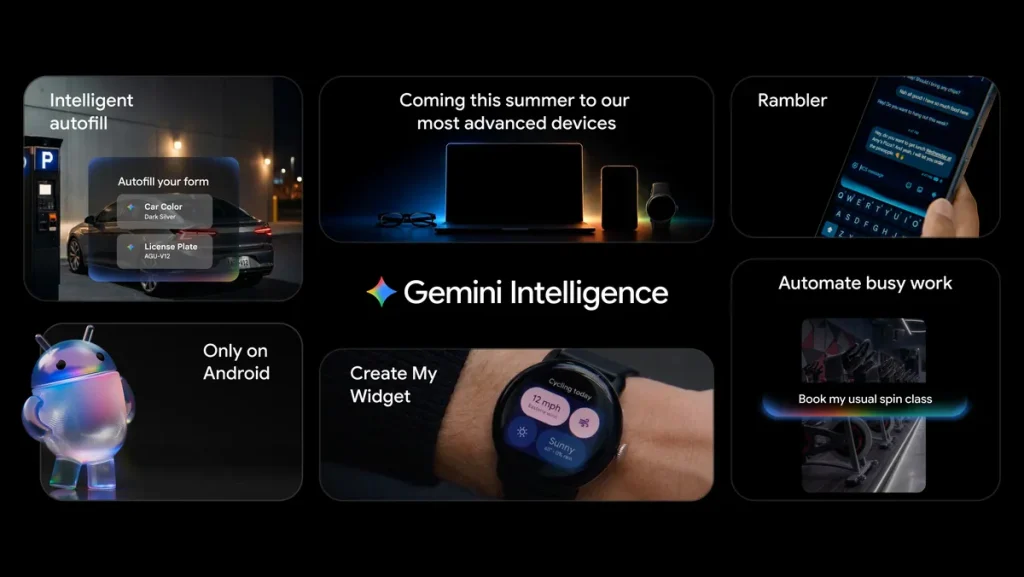
Source: blog.google
For marketing leaders, this scale shift introduces a critical risk: if an AI agent cannot seamlessly navigate your website’s transaction flow, it will silently abandon your brand and book with a competitor, leaving no data trail or abandoned-cart signal in your analytics. Common technical web designs, such as client-side rendering, missing form labels, custom div-based buttons, cookie walls, and heavy CAPTCHAs, will cause these automated transactions to fail. It is more important than ever to ensure your website is agent-ready through a technical audit.
How AI Forms Opinions About Your Brand
According to a recent Search Engine Land deep dive, AI search engines act as impartial “honest brokers” – recommending brands based entirely on the digital footprints they can analyze. To win the recommendation funnel, marketing leaders must feed AI engines a robust diet of Understandability (who you serve), Credibility (proof you are good at it), and Deliverability (topical authority).
Instead of relying on thin marketing copy, brands must harvest five core data streams to brief the machine effectively:
- Detailed Products & Services: Comprehensive descriptions detailing exactly who an offering is for and the specific problems it solves.
- Consistent Brand Narrative: Clear cohort-to-intent mapping delivered in a unified brand voice to prevent AI from losing confidence.
- OPID Business Operations: This is everything your business generates by running: onboarding, performance, integration, devotion, and all the day-to-day activity around them. The highest-signal stream, pulling unedited customer voices, support transcripts, and internal playbooks from behind closed doors to match real-world user queries.
- Authority Content: Deep, evidence-backed thought leadership that is corroborated by third parties.
- Bringing the Offline Online: Codifying offline panels, keynotes, and community sponsorships into machine-readable digital assets.
Because AI inherently trusts third-party proof over first-party claims, customer reviews are increasingly important. Whether it’s Trustpilot, Capterra, or Reddit, you need to know what people are saying about your brand. LLMs also consistently look for both pros and cons when answering a question about a product or brand … which means that they’ll look hard for the negatives even when your reputation is generally positive. Use all the resources at your disposal to own your narrative and address any negative sentiment quickly. Our Online Reputation in the Age of AI article provides clear steps for assessing and protecting your brand.
ICYMI: Recent SEO Blog Posts
Why Organic Traffic is Down (But Search Isn’t)