



AI in advertising refers to the use of artificial intelligence, particularly machine learning and automation, to enhance key elements of digital campaigns, including ad placement, bidding strategies, audience targeting, creative personalization, and performance forecasting.
While AI is rapidly transforming the advertising landscape with increased efficiency and scale, it’s important to approach its use thoughtfully. Human oversight is important to ensure accuracy, avoid “hallucinations” (false outputs or misguided decisions), and maintain alignment with brand goals and strategy.
Keep reading for our top “dos” and “don’ts” when it comes to AI in retail media advertising and paid search advertising.
AI in Retail Media Advertising (RMA)
While AI can be used to speed up processes that were once time-consuming and manual, make sure you’re always double checking behind the AI tools you use. Since AI optimizes based on past patterns, regular reviews with a human touch are still important to make sure you’re not overdoing it on a discontinued product or forgetting about newer SKUs.
The Dos of Using AI in Retail Media Advertising
AI can supercharge your retail media strategy by automating key tasks, uncovering performance opportunities, and saving time. While human oversight is still essential, the following AI-driven tactics can help you operate more efficiently and scale smarter across platforms like Amazon, Walmart, and Home Depot.
- Use Predictive Targeting: AI can analyze signals such as seasonality, historical behavior, pricing shifts, and engagement patterns to predict which shoppers are most likely to convert. Built-in tools like Walmart Scintilla (formerly known as Luminate) and Amazon DSP, as well as third-party platforms, use this data to serve your ads to high-probability audiences, boosting conversion potential without guesswork.
- Optimize Bids in Real Time: Instead of manually adjusting bids around the clock, let AI-powered bidding tools automatically respond to performance trends. These systems learn which products, keywords, and times of day deliver the best ROAS, ensuring your budget is always working efficiently.
- Choose the Best-Performing Ads: Platforms like Amazon DSP allow you to test multiple ad variants. AI can analyze performance across different audience segments and serve the best-performing creatives automatically, saving you time and increasing ad relevance.
- Leverage Inventory-Aware Campaigns: Retail media platforms are increasingly integrating inventory data into ad delivery, improving shopper experience.
- Forecast Campaign Performance: Not sure where to allocate your budget this month? AI tools can forecast performance across platforms based on historical data, helping you make smarter decisions about whether to lean into Amazon, Walmart, or another retail channel.
The Don’ts of Using AI in RMA
As we’ve emphasized before, we never rely on AI without active oversight. While it can streamline and accelerate campaign setup, leaving it entirely on autopilot puts your brand at risk. Missteps like mislabeled SKUs or broken URLs can break automation and derail performance – fast.
The most important rule? Don’t “set it and forget it.” Even with AI, your campaigns need regular check-ins. Monitor for performance anomalies, platform updates, and changes in consumer behavior that AI might miss or misinterpret. It’s also essential to confirm that AI optimizations are functioning as intended, and that any rules you’ve implemented align with your specific campaign goals. For example, a campaign focused on boosting visibility for new products will likely require a different optimization strategy than one aimed at maximizing sales for bestsellers.
Also, be aware that AI tools built into platforms like Amazon and Walmart may prioritize their own ecosystems, introducing potential platform bias. Finally, always ensure your AI applications comply with data privacy regulations like CCPA and GDPR, especially when working with first-party shopper data.
AI in Retail Media: Real-World Use Cases
AI is reshaping how retail media campaigns are built, optimized, and scaled. Here are three practical ways AI can enhance your advertising efforts across platforms like Amazon, Walmart, and Home Depot:
Use Case 1: Customer Sentiment Analysis
AI is incredibly effective for analyzing customer sentiment at scale. By filtering and summarizing product reviews, AI can highlight key positive and negative themes, giving you insights into how customers perceive your products. This information can guide how you frame your ad copy, enhance product listings, and improve A+ content, while also uncovering areas for product or messaging improvement.
Use Case 2: Ad Copy Ideation and A/B Testing
Need fresh ad creative ideas fast? AI can help you generate new headlines and descriptions based on your past top-performing copy. It’s a great tool for streamlining A/B testing by producing variation ideas that align with platform-specific ad guidelines while still reflecting your brand’s voice and goals.
Use Case 3: AI-Powered Image Generation and Enhancement
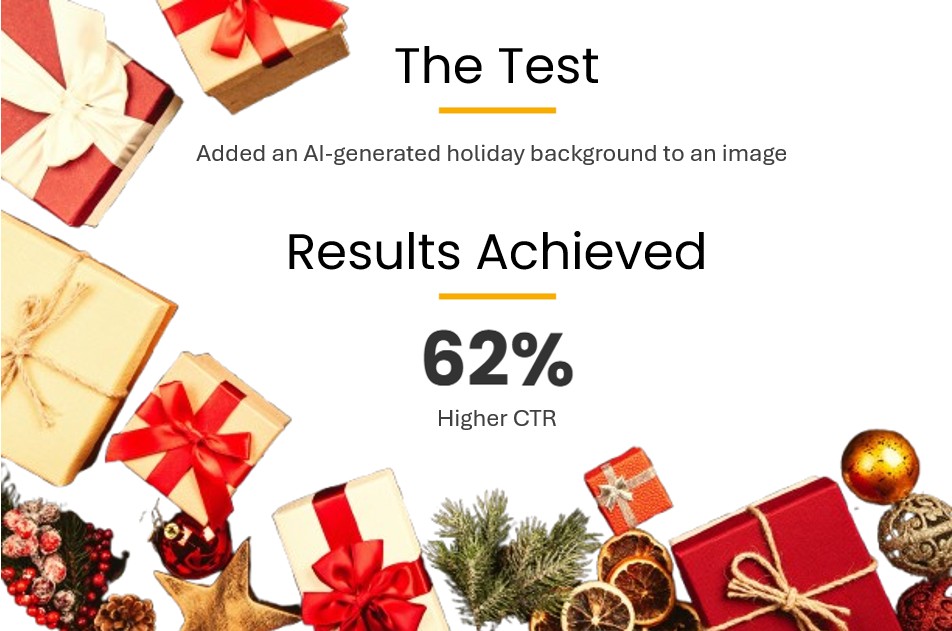
If you’re limited in lifestyle imagery, Amazon’s built-in Image Generator can place your product in AI-generated scenes based on prompts or seasonal themes. You can also use AI to update existing creatives. For example, our Retail Media team tested an AI-generated holiday background on an existing image for a December campaign, which resulted in a 62% increase in click-through rate (CTR).
AI in Paid Search Advertising
While AI can dramatically accelerate workflows that were once manual and time-consuming, it’s essential to keep a human in the loop. Regular reviews are still crucial to catch issues AI might overlook, like over-prioritizing a discontinued product or under-serving new SKUs. Remember, AI optimizes based on historical patterns, not business context. Without human oversight, it may continue pushing what worked in the past—even when it no longer makes sense.
How to Use AI Effectively in Paid Search Advertising
AI can significantly enhance your paid search campaigns by streamlining processes, improving targeting, and boosting performance. Here are some key ways to make the most of AI in this space:
- Leverage Smart Bidding Strategies – While manual bidding still has its place, Google’s AI-powered Smart Bidding often outperforms it by automatically adjusting bids based on real-time signals. With access to more data than manual bidding, automated bidding can improve ROAS, increase conversion rates, and even provide insights that can inform your broader campaign strategy.
- Use Responsive Search Ads (RSAs) – Like Amazon DSP, Google Ads can use AI to test different combinations of headlines and descriptions, adapting to different search queries in real time. This dynamic approach helps surface the most effective messaging to a wide range of users, keeping your ads fresh and more likely to resonate with diverse audiences. That said, the performance of RSAs still depends on the quality of the inputs—make sure your ad copy highlights unique value propositions, includes clear calls to action (CTAs), and reflects your brand voice.
- Identify & Exclude Negative Keywords – AI-powered tools can quickly analyze your search query reports and flag irrelevant or underperforming terms. Regularly updating your negative keyword lists based on these insights helps reduce wasted ad spend and improves targeting precision. By preventing budget from being spent on low-intent queries that don’t drive conversions, you’ll boost overall efficiency.
- Adapt Ad Messaging with Search Trends – Use tools like SEMrush, Google Trends, or even large language models like ChatGPT and Gemini to spot emerging topics and shifting search behavior. These insights can inform timely updates to ad copy and campaign messaging to better match what your audience is actually looking for.
The Don’ts of Using AI in Paid Search
At this point, we could’ve titled this post “Don’t Rely on AI Alone for Your Paid Media Campaigns!” It may sound repetitive, but it’s worth repeating: AI can support your paid media strategy, but it can’t replace it. While smart campaigns and automation can provide helpful suggestions, human input is essential for refining ad copy, aligning with business goals and making judgment calls that AI simply can’t.
Here are a few key reminders:
- Don’t blindly accept AI recommendations: Always assess automated suggestions within the context of your overall strategy. Use them as a guide but verify them against your business goals.
- Refine AI-generated copy: Even when using AI to create headlines and descriptions, it’s important to tweak the language to match your tone, communicate your offer clearly, and ensure it aligns with your brand’s messaging.
- Optimize your landing pages: AI can help bring users to your site, but your landing page experience still needs to close the deal. Page speed, responsiveness, and clarity of content are just as important as ever to drive conversions.
- Track performance at the right level: Ensure your analytics setup matches your measurement framework–whether you’re tracking at the session, event, or conversion scope. Without accurate tracking, it’s hard to evaluate how AI is impacting your results.
When to Use AI in Advertising and When Not To
AI is a powerful accelerator for digital advertising, but it’s not a substitute for strategic thinking. It excels at optimizing large-scale campaigns, making real-time adjustments, and uncovering patterns that might escape human analysis. When used wisely, AI can enhance efficiency, scale, and performance.
That said, there are moments when AI should take a back seat, like when emotional storytelling matters, when launching brand-new products (with no historical data), or when your data is incomplete or messy.
Want to unlock the full potential of AI in your paid media strategy? Book a meeting with our Retail Media or Paid Search team—we’ll help you combine human insight with machine precision for smarter, more effective campaigns.