

In this edition: Google updates, a bug fix, and big changes to AI Mode
Back-to-Back Google Updates
On March 24th, Google released the fastest spam update in history; it completed within 24 hours. Spam updates are designed to improve how Google’s automated systems detect and remove spam from its search engine results pages (SERPs). If you follow Google’s spam policies, your website should not see negative effects of spam updates. In fact, sometimes we see clients’ rankings improve because spammy sites that were ranking well are removed from the SERPs.
Just two days later, Google released the March 2026 Core Algorithm Update, which took 12 days to finish rolling out. That update was a typical core update, meant to reward high-quality content. If you have put a lot of work into improving the quality of your site, core updates are often when you can see that work rewarded. On the other hand, if you saw a decline in your key metrics and you think it resulted from the core update, reach out to the ROI Revolution SEO team.
SEO Alert: The GSC Impression Spike
If you notice a dip in your Search Console impressions over the next few weeks, don’t panic. It’s likely not a drop in visibility but a bug fix. Google recently announced that a logging error has been over-reporting impression data since May 13, 2025. While clicks and other metrics remain accurate, Google is now rolling out a correction that will bring impression counts back down to reality. Fortunately, clicks and actual traffic were never affected; this was purely a GSC impressions reporting error.
Google updated its Data anomalies in Search Console Report:
A logging error is preventing Search Console from accurately reporting impressions from May 13, 2025, onward. This issue will be resolved over the next few weeks; as a result, you may notice a decrease in impressions in the Search Console Performance report. Clicks and other metrics were not affected by the error, and this issue affected data logging only.
Google’s new “Agentic” playbook
Google Cloud AI Director Addy Osmani says it’s time to start optimizing for agents’ “limited patience for preamble.” He recommends front-loading the answer within the first 400 words of a page so AI tools can find the point before they stop scanning the content. This aligns with what we have already tested for AI retrieval at ROI: short, cleaner pages that are easy to scan with a content structure that is highly machine-readable.
Osmani released an open-source audit tool, agentic-seo, to help check for signals the agentic tools are relying on.
Personal Intelligence and Google App for Windows Roll Out
We may be getting one step closer to having a Jarvis-like assistant as Google expands Personal Intelligence in the U.S. This feature is available for personal (not Workspace) accounts in AI Mode, the Gemini app, and Gemini in Chrome for free-tier users.
According to Google, Personal Intelligence can use your personal preferences, including past purchases, favorite locations, and food and entertainment preferences, to help you with tailored shopping recommendations, tech troubleshooting, and custom itineraries.
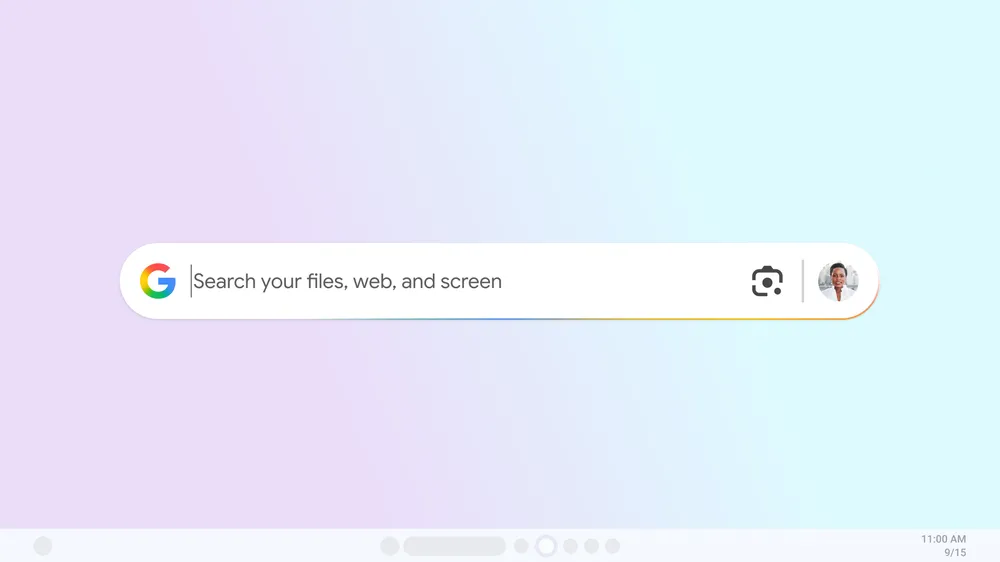
Additionally, Google rolled out the Google App for Windows on April 15th, which is the first AI-Mode-first search tool. The app is purely a search tool, so Gemini is not included, but Google Lens and Voice Search are integrated.
Google App for Windows
Source: blog.google
What these developments mean for SEO and GEO:
- Ensuring you have a sound technical SEO foundation is crucial.
- Search results will continue to fragment as personalized results become the norm across all Google’s surfaces. This means if a user has already purchased from your site, it’s more likely to be shown to them again the next time they search for a product or service you offer. On the other hand, organically attracting new users who already have a history with competing brands may be more difficult.
- Continue to focus on helpful content, including highly detailed product descriptions, frequently asked questions, and information that is not widely found elsewhere to improve your chances of being shown for searches across all Google’s surfaces, as well as chatbots, like ChatGPT, Claude, and CoPilot, so that your site has a better chance at getting that much needed first impression
AI Mode Introduces Split Screen View
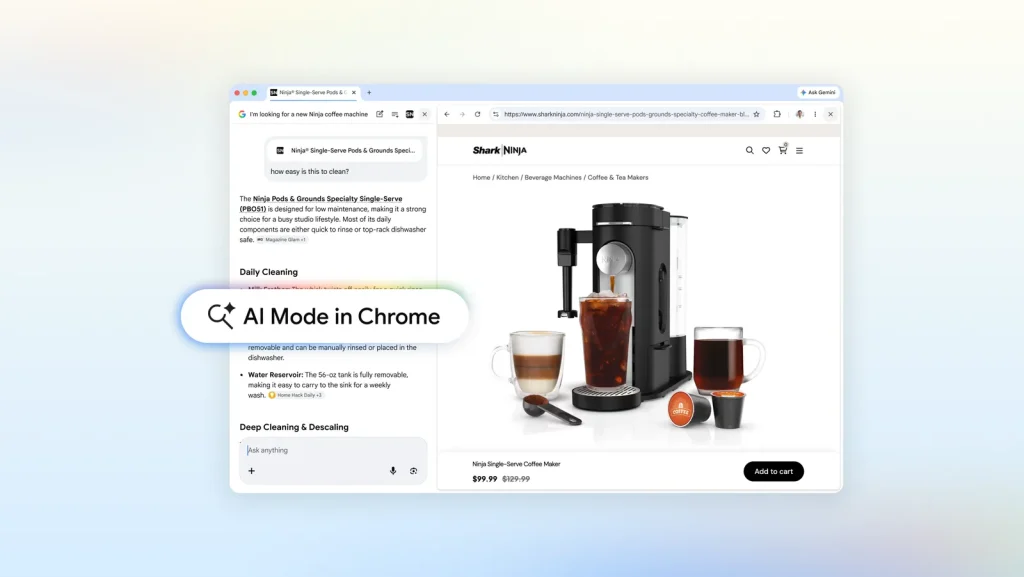
Speaking of being seen across Google surfaces, AI Mode has recently been updated to keep users with the Google ecosystem even longer. Now when you click a link in AI Mode, Chrome will open the site side-by-side within the same tab.
Source: blog.google
As you continue your search journey, the split view can stay open and continue the conversation with you, allowing Google to follow your actions across the internet even more.
While these sessions should still show up in GA4, the feature could change user behavior by encouraging them to stay in AI Mode rather than fully transitioning to a website and moving through the site’s expected conversion path.
One More Warning about Self-Serving Listicles
In an article at The Verge, Google spokesperson Jennifer Kutz answered concerns about self-serving listicles by saying the company is aware of the low-quality listicle content and is working to combat that kind of abuse. Pages created specifically to name a website’s product or services in the top spot out of “x” number of competitors is considered a form of manipulation and may result in the site being hit by Google’s spam algorithms.