Google’s Performance Max (Pmax) campaigns are a powerful addition to the digital advertiser’s toolkit, but the highly automated nature of the Pmax algorithm can be perceived as a lack of manual control. If you’re feeling hesitant to integrate this campaign type into your digital marketing mix or simply want to learn how to optimize Performance Max campaigns for maximum efficiency, explore Search Themes, an optional (and often misunderstood) signal in the ad interface that can unlock more relevant traffic to boost metrics like Return on Ad Spend (ROAS) and more.
About Performance Max & Search Themes
Performance Max campaigns launched to all advertisers in late 2021. This new Google Ads product is a one-stop-shop for ad placements across the Google ecosystem, from Search, Display, and Discover to YouTube, Gmail, and even Google Maps. While the broad reach typically garners plenty of impressions and clicks, it can also result in less precision – casting a wider net doesn’t always equal more conversions.
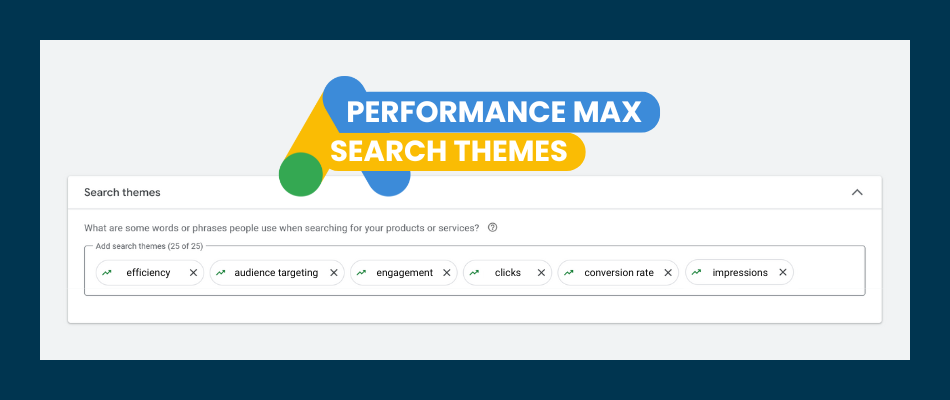
Search Themes are the perfect tool to counter the “black box” effect of Pmax’s automation. Rolled out for beta testing in October 2023, Search Themes allow advertisers to feed words and phrases into the algorithm to help Performance Max campaigns reach more relevant audiences. For each ad group, you can add up to 25 words or phrases.
Unlock Relevant Traffic with Search Themes
Well-researched Search Themes can help expand relevant audience targeting for your campaigns by helping to add context and fill in the gaps for the Pmax algorithm. Leverage your unique insights about your audience and offerings to help steer the algorithm towards users who are more likely to convert, boosting metrics like Click-Through Rate (CTR) and Conversion Rate (CVR).
Want to start digging into Search Themes? Here are a few questions to ask yourself to get started:
- Are there secondary audiences or verticals that your products apply to, but that might not be obvious?
- What unique value propositions set your brand apart from the competition?
- What specific problems do your offerings solve for customers?
- What product details are most important for your target audience?
Search Themes Examples:
Say you’re advertising a local art museum, and a unique offering of this venue is an interactive play space that is free to the public. Adding Search Themes like “free playground” and “outdoor activities for families” can help the algorithm surface your ads for a relevant secondary audience.
Does your ideal retail customer prefer to shop eco-friendly? Tell the Pmax algorithm that your brand fits the bill with terms like “sustainable clothing.”
Case Study: Improved Efficiency with Pmax Search Themes
At ROI Revolution, we’re committed to developing data-driven strategies that drive real results. So, when we learned about a new optional signal in Performance Max, we jumped at the opportunity to test its impact for our e-commerce clients.
A home décor and furniture brand wanted to improve their Google Ads efficiency. We leveraged their SEO team members’ insights about their brand, products, and audiences to develop Search Themes for their top three Pmax asset groups. We built out an A/B testing format and ran the campaign for six weeks to gather data – and the results were staggering.
Performance of asset groups with Search Themes versus control groups with no Search Themes added:
- +25% Clicks
- +22% Click-Through Rate
- +19% Average Order Value
- +37% Conversions
- +18% Return on Ad Spend (ROAS)
The initial test was so successful, we called it a win and added Search Themes to all active asset groups almost immediately.
Maximize Results with Optimized Ad Campaigns
Once we realized how impactful Search Themes can be for our clients’ ad campaigns, we integrated this into our Pmax best practices. If you want to optimize your Performance Max campaigns but aren’t sure where to begin, contact us to learn how our digital advertising experts can help you make the most of your ad spend.